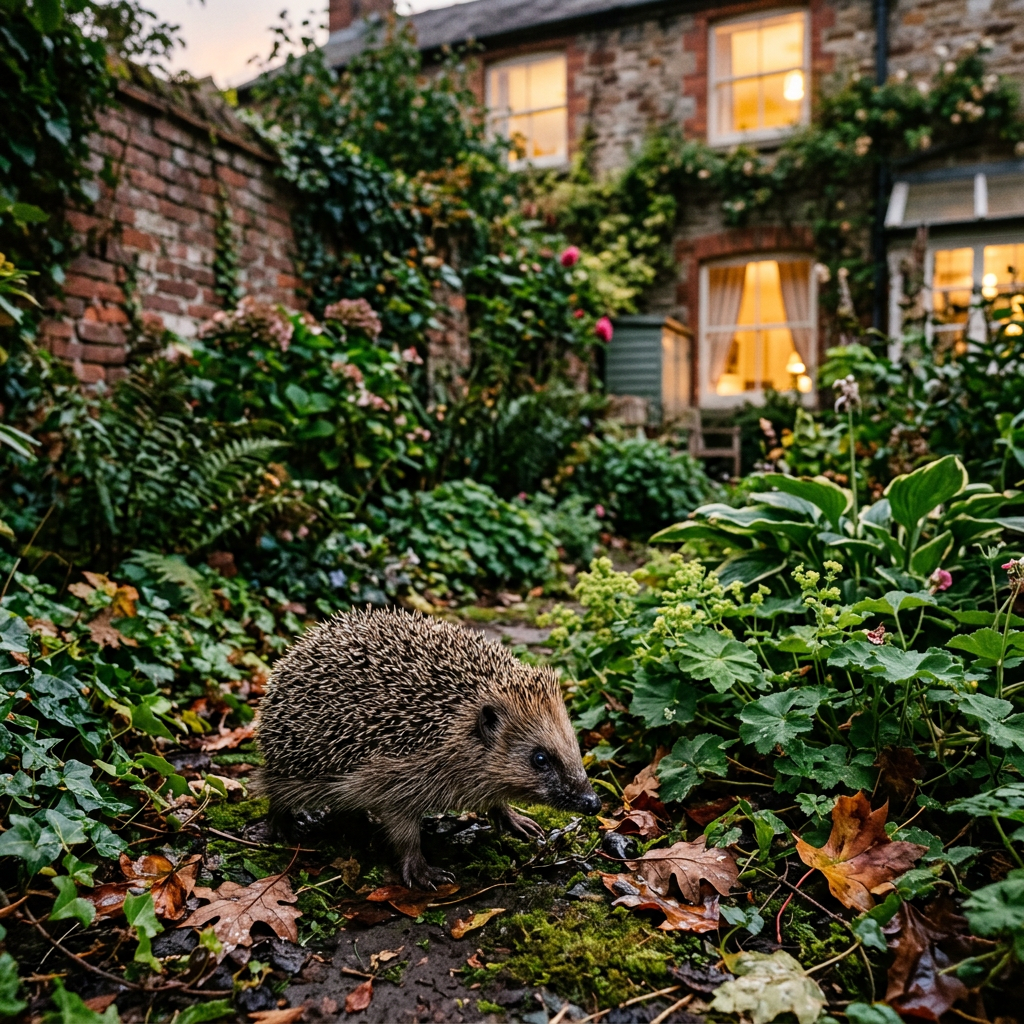
Urbanisation is usually cast as a villain in the story of biodiversity loss. Often for a good reason – concrete replaces habitat, roads cut through territories, and noise and light disturb the animals that once lived there. So it may come as a surprise that some of the UK’s most vulnerable mammals are doing better in towns and cities than almost anywhere else.
A team of researchers led by Emilie Hardouin and Marin Cvitanović from Bournemouth University studied mammal records collected across South-East Dorset between 2000 and 2018, focusing on the conurbation of Bournemouth, Christchurch and Poole. Dorset is one of England’s official biodiversity hotspots, but it has also seen heavy urbanisation and intensive farming. The team wanted to know whether urban land actually supports fewer species than the county’s other habitats, or whether that assumption deserves a closer look.
A city full of surprises
The dataset came from the Dorset Environmental Records Centre and held more than 11,000 georeferenced sightings, most of them submitted by members of the public rather than trained scientists. The researchers compared the mammal communities found in urban and suburban areas in Bournemouth with those in arable land, grassland, woodland and heathland in its surroundings.
Urban areas in Dorset turned out to have a genuinely distinct mammal community, driven mainly by foxes and West European hedgehogs, both recorded far more often in towns than anywhere else. More striking was which animals were thriving there. Four of the five mammals classed as vulnerable or endangered turned up in urban areas, including the European rabbit, the hazel dormouse, the West European hedgehog and the European water vole. The hedgehog had more recorded sightings there than in any other habitat.
Why cities might suit certain species
Part of the explanation lies in the flexible habits of generalist species. Hedgehogs and foxes can adapt to human-modified landscapes in a way that specialists cannot. Gardens, parks, hedgerows and even industrial land offer food and shelter that these animals are willing to exploit. Species with narrower needs, such as the hazel dormouse, tend to remain tied to the habitat that suits them best, in this case woodland, even though a few individuals turn up elsewhere.
This pattern fits with a growing body of research from other countries. Urban green spaces in Sweden have been found to hold two thirds of that country’s red-listed species, and cities in Australia support around 30% of nationally threatened species. The Bournemouth University findings add the UK, and specifically Dorset’s mammals, to that picture.
A word of caution about the data
The researchers are upfront about an important limitation. The records used came almost entirely from volunteers reporting sightings as they happened to notice them, rather than from systematic surveys. People do not report every animal they see with equal enthusiasm. Hedgehogs and badgers appeared in the data far more often than house mice or brown rats, species that are almost certainly more numerous but far less appealing to spot and report.
This reporting bias likely inflates the apparent abundance of “charismatic” urban species like hedgehogs. Even so, it does not fully explain the results. Other research using more controlled survey methods has also found urban Britain to be a stronghold for hedgehogs, so the broad pattern the team observed is likely to be real, even if the exact numbers should be treated carefully.
What this means for conservation
Recognising towns and cities as habitat, rather than simply as a threat to habitat elsewhere, opens up practical options for protecting vulnerable species. Better connected gardens, sometimes achieved through small gaps cut into fences known as hedgehog highways, could help hedgehog populations move more freely between green spaces. Urban hedgerow networks could offer similar benefits to dormice, which rely heavily on continuous cover to travel safely. Parks, sports grounds and ponds with varied, well-managed vegetation have also been shown to support water voles, one of Britain’s fastest declining mammals.
None of this replaces the need to protect Dorset’s woodlands and heathlands, which remain essential for the specialist species that cannot survive anywhere else. But it does suggest that urban planners and local conservation groups have a genuine role to play, one that is often overlooked. Gardens, verges and green corridors in urban areas are not simply the leftover space between buildings. For several of the county’s rarest mammals, they are already home.
Boakes, Z., Stafford, R., Bramer, I., Cvitanović, M., & Hardouin, E. A. (2024). The importance of urban areas in supporting vulnerable and endangered mammals. Urban Ecosystems, 27(3), 883–894. https://doi.org/10.1007/s11252-023-01492-z


Leave a Reply