Every summer, Cornwall’s population nearly doubles. Visitors flock to its coastline, its beaches, its history, and increasingly, to holiday cottages and Airbnbs that were once family homes. For many locals, that influx is not just an inconvenience. It has become tangled up with a decades-old sense of Cornish identity, and a very modern housing crisis.
A new study by Conan Millen and Dr Marin Cvitanović of Bournemouth University set out to understand exactly how these two things, housing anger and national identity, fit together in Cornwall. Their answer: it’s complicated, and it’s not just about culture, but also about age and money.
A region with a housing crisis and a national identity
Cornwall is the only Celtic territory in Britain without any form of political devolution. Yet it has a strong and distinct culture, including its own Brythonic language, which was revived after nearly dying out, and its own officially recognised national minority status, granted in 2003. Every March, St Piran’s Day sees the Cornish flag flying and local traditions celebrated as a visible expression of that identity.
At the same time, Cornwall is one of the poorest regions in Western Europe. Wages sit at around 84% of the UK average, but housing costs are so high relative to income that the county ranks as the 21st most expensive place in Britain to buy a home when you factor in local earnings. The researchers note that a median-income Cornish couple can only afford a flat in 6 of the county’s 47 postcodes; houses are out of reach almost everywhere. The South West of England also has the highest share of second homes in the UK, at 18%, and Cornwall alone is estimated to have more than 13,000 second homes alongside 11,000 people on the social housing waiting list.
Put those two things together, a proud regional identity and a housing market squeezed by outside money, and you get fertile ground for what researchers elsewhere have called “housing nationalism”: the tendency for housing scarcity to get channelled into nationalist or “us versus them” rhetoric. The Cornwall study wanted to test how real, and how widespread, that dynamic actually is.
How they asked the question
The researchers ran an online survey of 504 Cornwall residents in autumn 2023, sharing it through social media and letting it spread organically. People answered 13 questions about second homes, tourism, housing affordability, and how connected they felt to Cornwall’s history and government. The survey also included questions about their age, income, employment, and whether they identified as Cornish, English, British, or something else.
Rather than looking at each question in isolation, the team used a statistical technique that groups related answers together to reveal broader underlying attitudes (called factors), essentially asking whether people who feel strongly about one issue also tend to feel strongly about another. This produced four distinct clusters of opinion.
Four ways people think about second homes
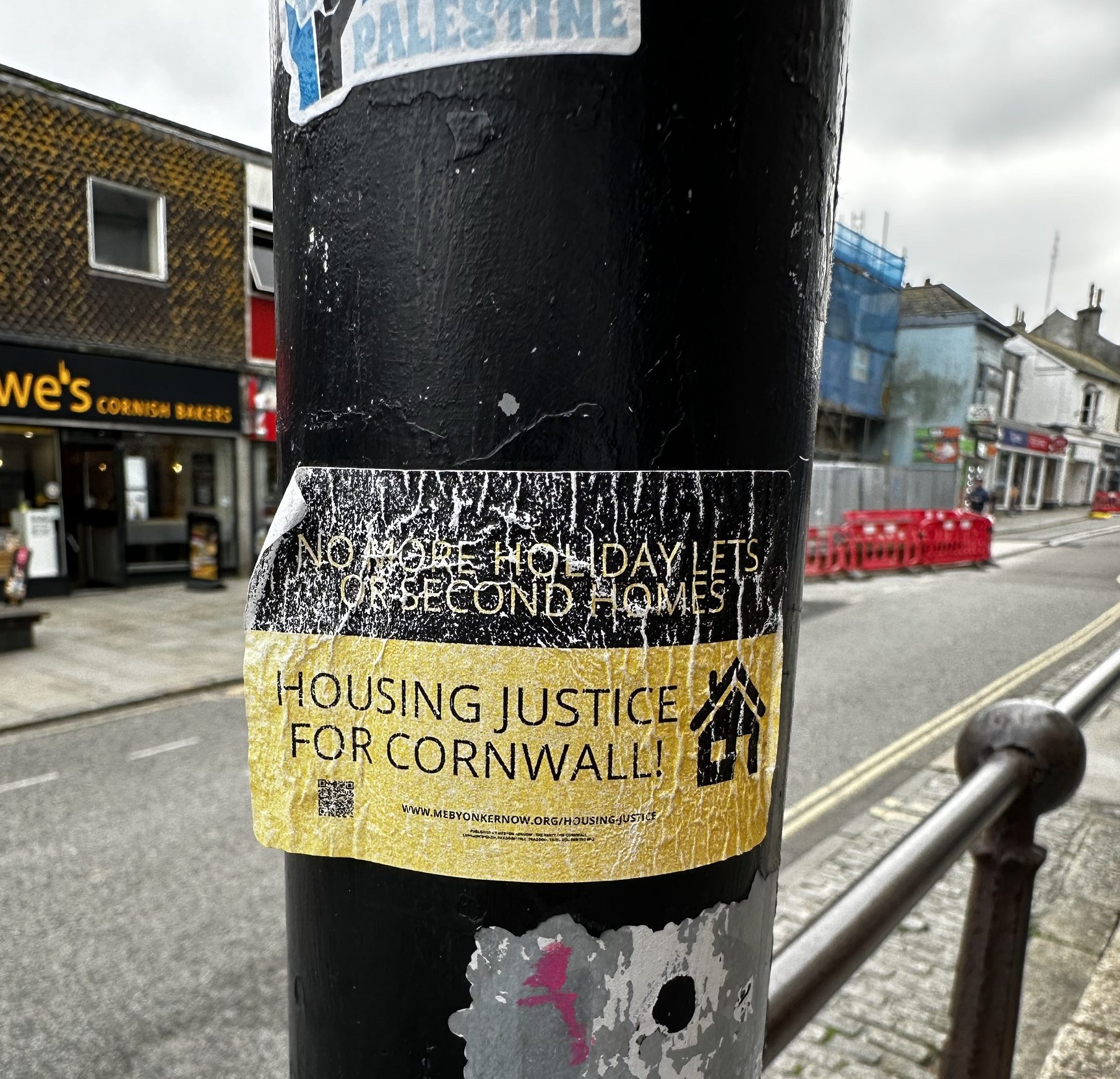
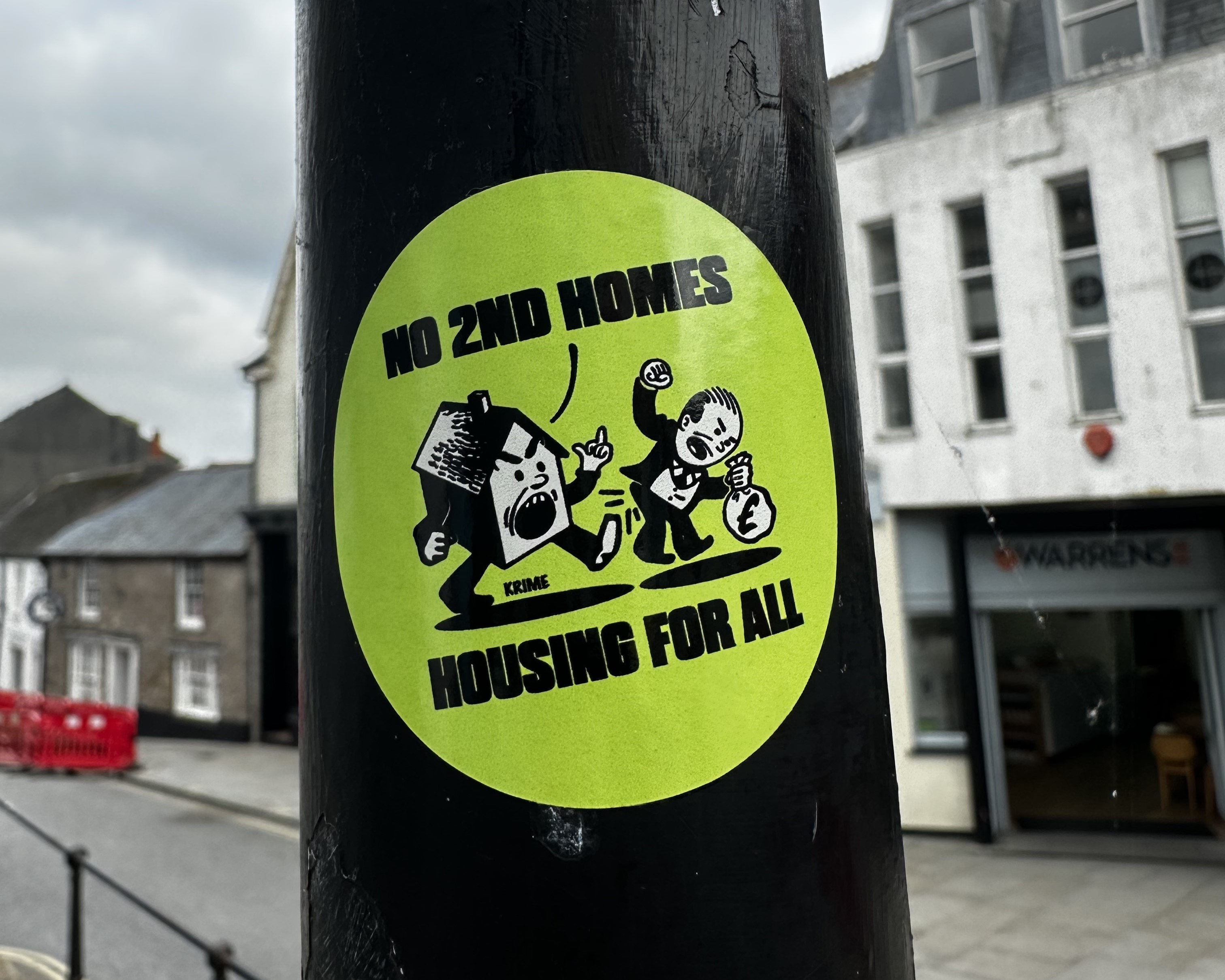
Factor 1: Opposition to holiday lets and second homes. People who scored highly here believed there were too many second homes locally, that Airbnbs damage community life, and that stronger restrictions were needed.
Factor 2: Political representation and shared history. This captured how represented people felt by local and national government, plus a sense that Cornwall’s shared history brings people together and that tourism helps sustain that heritage.
Factor 3: Localism and “in-group” preference. This was about favouring locals over outsiders, for instance, agreeing that a Cornish person buying a second home is preferable to someone from outside the county, and that incomers don’t get involved in the community.
Factor 4: Positive views on second homes. People here believed second homes support local growth and that affordable housing is already sufficient year-round.
Crucially, opposition to second homes (Factor 1) and localism (Factor 3) tended to go together, while both were the opposite of positive views on second homes (Factor 4). Feeling politically represented (Factor 2), meanwhile, stood somewhat apart from the other three, though it was weakly linked to more favourable views of tourism.
Who thinks what, and why
This is where the study’s most interesting findings lie. Age turned out to be the single strongest predictor of attitudes, particularly for localism: younger respondents, especially those under 34, were far more likely to favour local control and be wary of outsiders than those over 45. Cornish-identifying respondents were also significantly more opposed to second homes and holiday lets than those identifying as English or British, and scored highest on localism.
However, these attitudes weren’t purely about ethnic or cultural identity – income mattered too. People in the lowest income bracket were significantly more opposed to second homes than those in higher income brackets. Seasonal workers, who face more precarious employment, scored higher on localism than those in permanent full-time jobs. Opposition to second homes was also higher in postcodes with higher average house prices, suggesting these views track the actual cost of living, not just cultural background.
Meanwhile, the more positive, integrated view of tourism and government (Factors 2 and 4) was more common among older, higher-income, and English/British-identifying respondents. Interestingly, Factor 2 specifically (feeling represented, valuing shared history) wasn’t linked to ethnic identity at all. In other words, feeling connected to Cornwall’s history and feeling politically heard cut across identity lines while support for second homes as an economic good did not.
Identity as a response to inequality, not just a cultural label
The authors argue this points to something more nuanced than a simple Cornish-versus-English divide. Younger, lower-income, and more precariously employed residents, the people facing the sharpest end of the housing crisis, are also the ones most likely to reach for a Cornish identity when talking about housing, and most likely to frame the second-homes issue in “us and them” terms. Older, wealthier respondents, more likely to identify as English or British, are more comfortable with the tourism economy and feel more politically represented.
That suggests Cornish nationalism, at least as expressed in this survey, isn’t simply an ancient cultural attachment bubbling to the surface. It’s also, perhaps mainly, a response to being economically squeezed and politically overlooked. The authors describe this as a form of “economic regionalism”: identity mobilised not for its own sake, but as a way of contesting who gets to benefit from, and who gets shut out of, life in Cornwall.
What comes next
The researchers are cautious about their sample. It skewed younger and more Cornish-identifying than the general population, likely because of how the survey was shared. But the pattern is consistent with other research on the housing crisis in Cornwall and elsewhere.
Their conclusion is that policies aimed only at restricting second homes or holiday lets may miss the point. Drawing on other research, they suggest that building more affordable housing, and rethinking the tax and lending rules that make buying second properties attractive, may matter more than caps on Airbnbs alone. Until the deeper economic inequalities are addressed, the tension between Cornwall’s holiday-home economy and its sense of itself looks set to continue.
Millen, C., & Cvitanović, M. (2026). Second Homes and the (Re)production of Cornish Nationalism. Geographical Review, 116(1), 39–59. https://doi.org/10.1080/00167428.2025.2578855


Leave a Reply