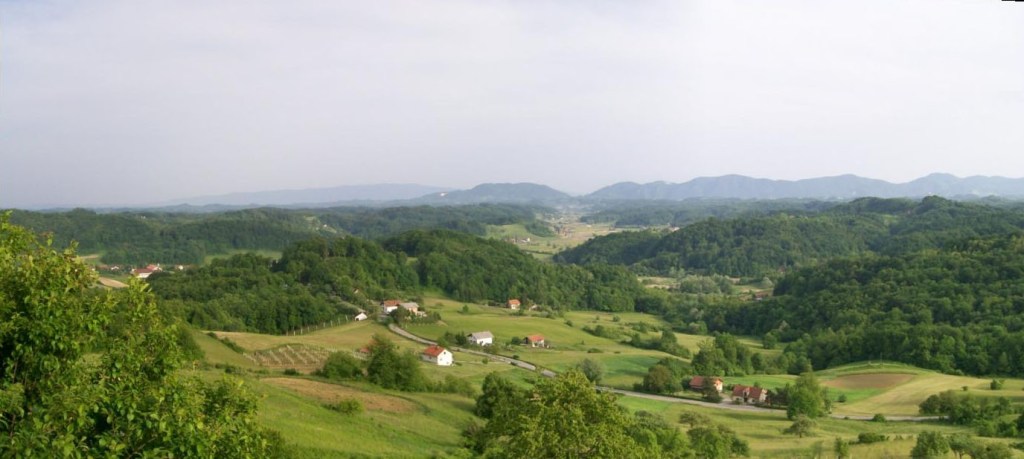
Drive through the hills of northern Croatia’s Hrvatsko Zagorje and you’ll see a patchwork landscape of small fields, scattered farmhouses, forested slopes, and open grassy meadows. Some are grazed by livestock, while others are cut for hay to feed the herds through winter. These meadows are part of a much wider European landscape – grasslands across the continent are among its richest habitats, supporting an extraordinary variety of plant and animal life. Many species, from butterflies to wildflowers, depend on grasslands maintained through traditional, low-intensity farming, making changes in how they are managed a threat to biodiversity. That broader story is playing out in Hrvatsko Zagorje, too. Over the past few decades, its grasslands have been slowly changing, and a team of researchers from the University of Zagreb and Bournemouth University, led by Dr. Marin Cvitanović, set out to find out exactly what was happening, and why.
Their study, published in the Journal of Rural Studies, dug into one specific question: when socialism collapsed in the former Yugoslavia and the region shifted to a market economy, what happened to the traditional grasslands that farmers had relied on for generations? To answer it, the researchers combined remote sensing, statistical modelling, and nearly 300 face-to-face household surveys.
A Region Built for This Kind of Study
The researchers picked Hrvatsko Zagorje for a reason. It’s a rural area dotted with small, dispersed villages, where over 90% of the population still practices some form of traditional agriculture and 98% of farmland is privately owned – the highest rate in Croatia. If you wanted to watch how ordinary small-scale farmers adapted to a changing economy, this was the place to look.
That’s partly a legacy of history. Unlike most of Eastern Europe, Yugoslavia largely abandoned agricultural collectivization by the late 1950s, leaving most land in private hands. But the state still favored industrial development over farming, pushing rural people into cities for work. What kept the countryside from emptying out entirely was a peculiar arrangement: so-called “peasant-workers” who lived on their family land in the countryside but commuted into town for factory jobs, never quite letting go of the land. Tourism growth in the 1970s and money sent home by emigrants helped keep this fragile balance in place for decades.
To track how the landscape changed, the team analyzed satellite images from the 1991-2011 period, capturing two decades of Croatia’s post-socialist transition. Grasslands now cover about 21.5% of the county, concentrated mainly in the lowlands, where almost half of the land below 200 metres is grassland, and becoming increasingly rare at higher elevations.
The overall grassland area fell by about 3% over the 20 years, roughly 8.3 square kilometres. But that figure is the balance between areas lost and areas gained, not the amount of grassland that stayed unchanged. Around 40% of grassland changed in some way during the period. Some was converted to cropland, while elsewhere abandoned farmland was reverting to grassland, which was then gradually encroached upon by forest. These processes often happened side by side, sometimes in neighbouring valleys. The pattern also ran counter to the national trend, with Croatia as a whole seeing a slight increase in grassland over the same period.
Two Forces Pulling in Different Directions
Once the researchers ran the numbers through statistical models, a clear pattern emerged, and it wasn’t just about economics.
In the flatter, lower-lying areas, grasslands were being plowed under and converted into cropland. Flat land is easy to farm, easy to mechanize, and closer to markets and roads.
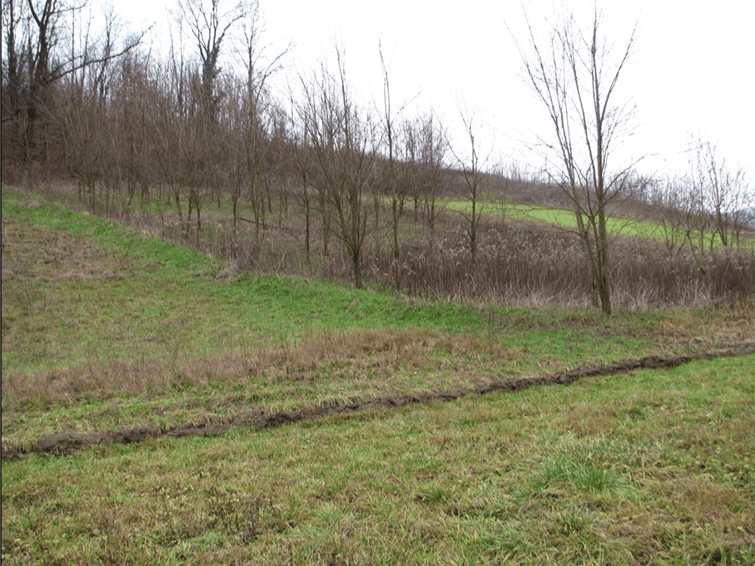
But in the hillier, higher-altitude areas, the opposite was happening: farmland was being abandoned and turning into grassland, and eventually forest. It wasn’t only cropland going fallow, either. Even where grassland itself was never plowed over or built on, many households simply stopped actively managing it the way they used to. What was driving that abandonment was not primarily unemployment or poverty, as might be expected during a period of economic transition. Instead, it was closely linked to depopulation, an ageing population and rising education levels. Areas with higher levels of education saw more farmland abandonment, likely reflecting a further shift towards employment outside agriculture.
Location mattered too. Steeper, higher and more remote plots, farther from roads and settlements, were harder to maintain and less attractive to farm. The result was a landscape changing in different ways depending on where you looked. Accessible lowland grasslands were more likely to be brought into cultivation, while abandoned farmland in the hills was gradually being reclaimed by grass and, eventually, forest.
What the Farmers Themselves Said
The satellite data and statistical models can show what changed, but not always why people made the choices they did. That’s where the household survey filled in the gaps.
The findings were striking. Between 1991 and 2011, 61% of surveyed households had significantly cut back their livestock or abandoned pasturing altogether. By the time of the survey, livestock keeping had become the exception rather than the norm in this traditionally agricultural region, with 93% of respondent households owning no animals at all. When asked why they’d cut back, people cited lack of profit, old age or illness, and simply not having the time. Government agricultural subsidies, it turns out, played almost no role in these decisions; only around 10% of these small traditional farms in this survey received any subsidies at all, both during socialism and after.
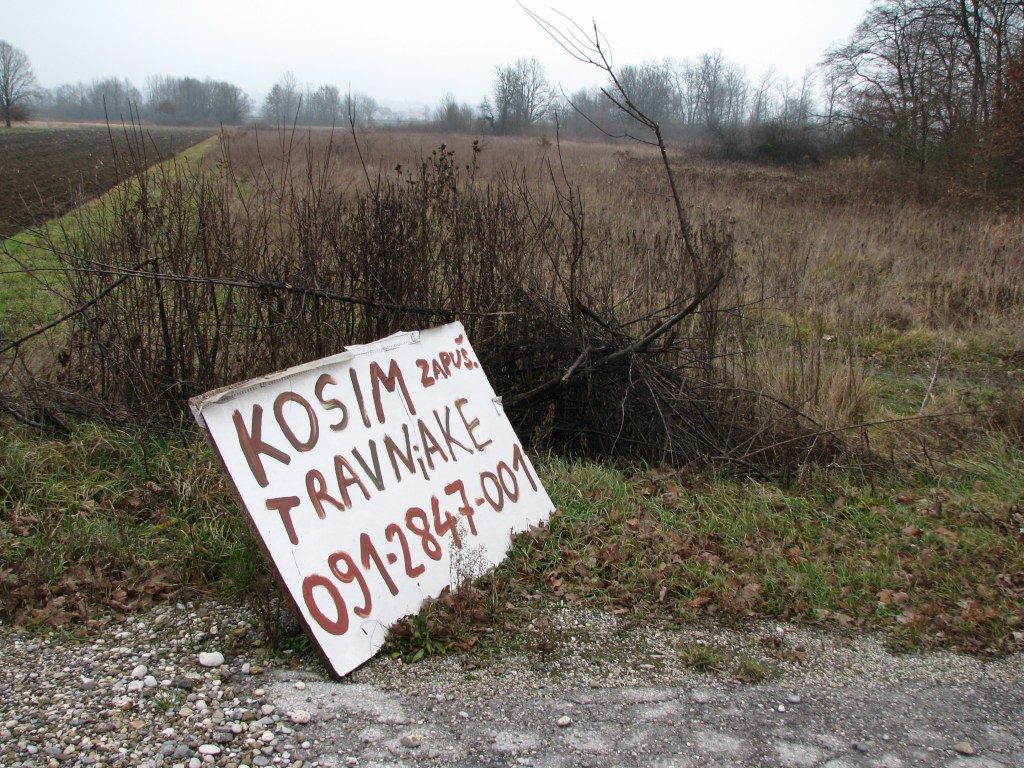
Yet here’s the part that complicates any simple story of decline: despite giving up livestock and formal farming, 87% of respondents said they still try to maintain their grassland, mostly just by mowing it. Why bother, if there’s no economic reason to? The answer seems to be cultural. Older, less-educated residents in particular tend to view abandoning land as something close to shameful, a break from tradition that shouldn’t happen if it can be avoided. So people keep mowing meadows that no longer feed any animals, purely to keep the land looking cared for.
Meanwhile, a different, newer story was emerging in some areas: younger, better-off households converting grassland into farmland not for subsistence, but for organic food production, flower and tree cultivation, or rural tourism ventures. It was a lifestyle choice rather than a survival strategy.
A Landscape Waiting for Its Next Chapter
Put together, the picture that emerges is of a region straddling two very different logics. On one hand, market forces are sorting the land efficiently: flat, accessible farmland stays productive, while remote, marginal land slowly reverts to nature. On the other hand, deep-rooted cultural values are keeping some of that marginal land from fully disappearing, at least for now, propped up by the same peasant-workers who kept this landscape going all through socialism, a generation that still feels obligated to the land even after giving up on farming it for a living.
But that generation is aging out. Many younger, more educated people are leaving the county for the cities. Even among those who stay, more are working full-time outside agriculture, leaving them with less connection to farming to pass on to the next generation. It seems that peasant-workers have slowly become simply workers. As farming has declined as a way of making a living, the grasslands have survived largely because a generation of traditional farmers has continued to mow and manage them. In doing so, they have helped preserve some of Europe’s most biodiverse grasslands. But once that generation is gone, a landscape shaped by generations of farmers could begin to vanish with them.
Cvitanović, M., Lučev, I., Fürst-Bjeliš, B., Borčić, L. S., Horvat, S., & Valožić, L. (2017). Analyzing post-socialist grassland conversion in a traditional agricultural landscape – Case study Croatia. Journal of Rural Studies, 51, 53–63. https://doi.org/10.1016/j.jrurstud.2017.01.008


Leave a Reply