Tucked between Zagreb’s apartment towers, where you might expect a parking lot or an overgrown patch of weeds, are small mazes of fenced-off vegetable plots, with tomatoes and beans growing among them. Some of these gardens have been there since the 1970s. Others sprang up just a few years ago. And according to a study published in the journal Geoforum, these two ways of growing food in the middle of a big city tell very different stories about the societies that produced them.
The researchers behind the study wanted to understand how community gardens in Zagreb have changed across two completely different political and economic eras: socialist Yugoslavia before 1991, and the market-driven, post-socialist Croatia that followed. To do it, they sat down with the gardeners themselves, spending dozens of hours in interviews across seven garden sites around the city, talking to people who had spent thirty years tending the same small square of dirt alongside people who’d only just picked up a trowel for the first time.
Gardens Nobody Was Supposed to Have
The old gardens trace back to a specific moment in Yugoslav history. After World War II, the country threw itself into rapid industrialization, pulling huge numbers of people out of the countryside and into cities almost overnight. Zagreb, as the industrial heart of Yugoslavia, absorbed much of that migration, and new apartment blocks went up fast to house the incoming workers. But construction plans didn’t always move as quickly as the people did. Empty lots sat around new buildings, waiting for money or approval that hadn’t yet arrived, and the newly arrived tenants, many of whom had grown up farming, simply started clearing the overgrowth and planting.
Nobody gave them permission. There was no official allotment garden system in Yugoslavia the way there was in places like Poland, East Germany, or Russia, where the state actively organized and regulated small gardens for workers. In Zagreb, gardening on unused land was something people just did, quietly and without paperwork, and the authorities mostly looked the other way. That informality became part of the gardens’ identity. Each family fenced off its own plot, an oddly individualistic gesture in a society built around the idea of communal property, and the researchers argue this was itself a small act of quiet defiance, a way of claiming something as private in a system that officially discouraged the very idea.
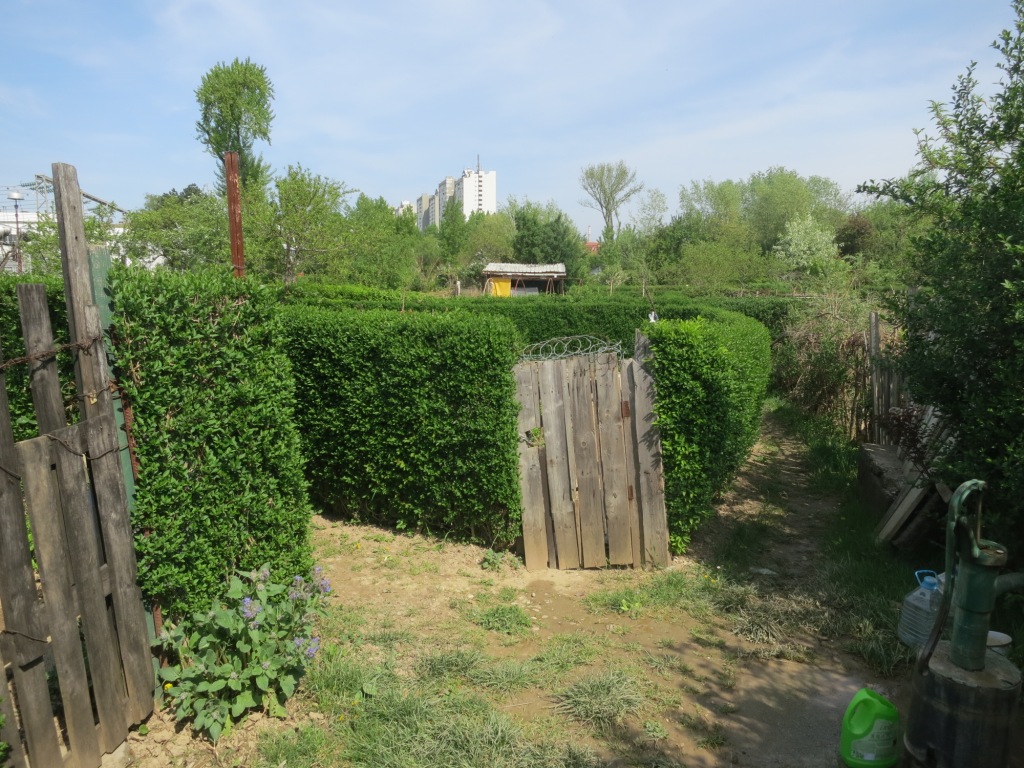
At the time, this wasn’t always seen as charming or admirable. The gardeners were, almost without exception, people of rural origin, first-generation migrants who’d left villages for factory jobs. That made them an easy target for mockery, sometimes from neighbors who’d fled the countryside themselves and wanted nothing more to do with that kind of labor, and sometimes from people who’d never had a rural life at all and simply saw it as backward. But for the gardeners themselves, tending a plot wasn’t a compromise or a fallback. It was who they were, an identity they’d carried with them from the village and could not leave behind just because the address had changed.
Decades later, most of the people still tending these gardens are elderly, some now in their seventies or eighties, having kept the same plot going since their thirties. Their children, mostly raised entirely in the city, rarely show interest in taking over. Some plots have already been abandoned as their original gardeners grow too old to keep up with them. Legally, the land was never theirs to begin with, and the gardeners know it. Many spoke about a persistent, low-level fear that one day a construction crew would simply show up and reclaim the land for whatever it was originally meant to become.
From Bulldozers to a City Policy
The new gardens have a completely different origin story, and it starts with a protest. In 2012, a small group of mostly younger residents in the Travno neighborhood began replanting an old, half-abandoned socialist-era garden. City officials responded by announcing plans to clear the area entirely to build a park. That decision backfired. A grassroots pushback, organized partly through a citizens’ initiative that came to be called Parkticipation, escalated into a genuine public standoff. In a nearby neighborhood, Savica, the standoff got physical: officials sent in construction equipment to begin clearing another garden, and residents blocked it. One gardener described the moment a bulldozer actually arrived and how the crew ultimately turned back rather than push through the resistance.
The public pressure worked. In 2013, the city formally launched an “Urban Gardens” program, officially leasing small plots of land to residents for the first time in Zagreb’s history. Within the first year, the city had signed hundreds of contracts across several new gardens, drawing applicants from families with children, war veterans, retirees, and the unemployed alike. The program expanded quickly in the years that followed, spreading to more neighborhoods as demand kept outpacing the available land.
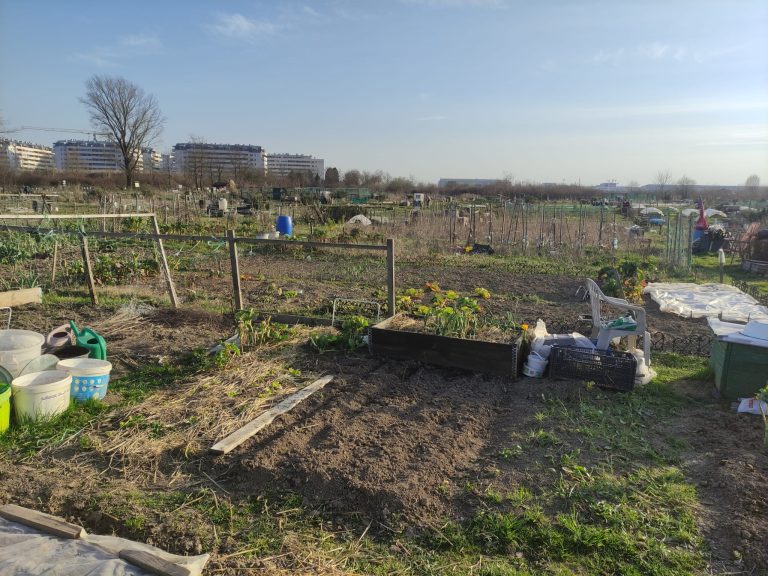
The people gardening in these new plots look very different from the old-timers a few kilometres away. Most grew up entirely in the city and have no farming background, openly admitting that they are learning as they go, often using online guides or a manual produced by the city for beginners. Their reasons for gardening tend to centre on distrust of supermarket food, a desire to reconnect with nature, and simply having a small outdoor space that feels like their own. Interestingly, across both the old and new gardens, almost nobody mentioned money as their main reason for gardening. It sometimes came up as a useful benefit, helping to stretch a modest pension a little further, but never as the main reason people kept returning.
Different Eras, Same Undercurrent
What ties both generations of gardens together, the researchers argue, is a kind of quiet resistance to whatever system surrounds them. Under socialism, tending a small, fenced, privately claimed garden pushed back against a society built on communal ownership and industrial progress. Today, the new gardens push back the other way, offering shared, cooperative green space inside a city increasingly shaped by private development and market logic.
Both eras of gardens also share the same underlying vulnerability. Neither the old illegal gardens nor the new officially sanctioned ones exist in any long-term city planning document. The new gardeners sign contracts for only two years at a time, renewable at the city’s discretion, and there’s still no formal legal category in Croatian planning law for something as simple as an urban garden. Fifty years apart, in two entirely different political systems, the people growing vegetables in the middle of Zagreb are still, in a sense, squatting on borrowed time.
Slavuj Borčić, L., Cvitanović, M., & Lukić, A. (2016). Cultivating alternative spaces – Zagreb’s community gardens in transition: From socialist to post-socialist perspective. Geoforum, 77, 51–60. https://doi.org/10.1016/j.geoforum.2016.10.010


Leave a Reply